

Why Do Nasolabial Folds Get Deeper? Understanding Smile Lines & Your Treatment Options
Nasolabial folds are the creases that run from the sides of the nose towards the corners of the mouth. They are often called smile lines or laughter lines, which is appropriate: they are a normal part of facial anatomy and movement, not something that appears only because the face has “aged badly”.
What changes over time is how deep the fold looks. That can happen because of the skin itself, changes in the cheeks and mid-face, shifts in facial fat, weight loss, bone structure and the way an individual face is built. For that reason, trying to fill the visible line without understanding why it has deepened can produce an unnatural or heavy result.
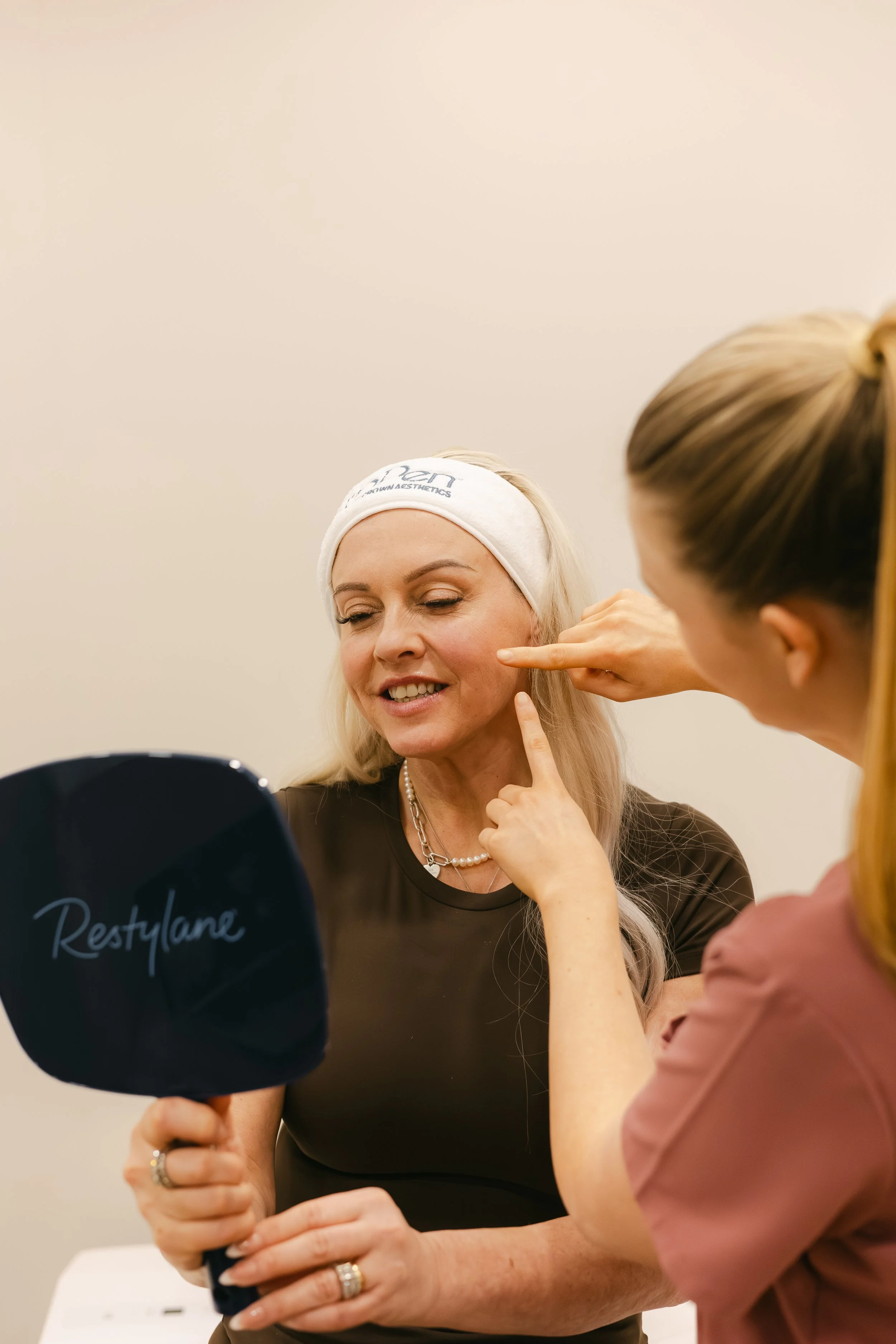
What are nasolabial folds?
The nasolabial fold forms at the boundary between the cheek and upper lip area. It becomes more visible when we smile because the cheek moves and compresses against this natural transition. Even young faces have nasolabial folds; the goal of aesthetic treatment should not be to remove a normal anatomical feature or stop facial expression.
As facial support changes, however, the fold can look deeper at rest. Some people notice this gradually with age, while others see a more obvious change after significant weight loss or changes in facial volume.
Why do smile lines become deeper?
Changes in cheek and mid-face support
The cheek does more than create facial contour. It also provides support to the tissues that sit above and beside the nasolabial fold. When that support changes, the overlying tissue can sit differently and the fold may appear heavier or more shadowed.
Facial fat and volume changes
Facial fat is arranged in compartments rather than one continuous layer. Over time, some areas can lose volume while others descend or redistribute. A patient may therefore notice deeper folds even though the problem is not simply “a line that needs filling”.
Changes in bone structure with age
The facial skeleton also changes with age. Subtle changes around the cheeks, nose and upper jaw can affect the support available to the overlying soft tissues. These changes are one reason facial ageing is best assessed in three dimensions rather than by looking at a crease in isolation.
Skin laxity and collagen loss
As collagen and elastin decline, the skin becomes less resilient and may drape more noticeably around existing facial folds. Improving skin quality will not recreate lost deep structure, but it can be relevant when laxity and crepiness are part of the overall picture.
Weight changes
Weight loss can alter the distribution and volume of facial fat, sometimes making folds and shadows look more pronounced. Weight gain can also change the relationship between the cheek and lower face. The effect is highly individual and depends on baseline anatomy as well as the amount and speed of change.
Natural facial anatomy and movement
Genetics, cheek shape, facial width, tooth and jaw support, and the way you smile all influence nasolabial folds. One side may naturally be deeper than the other because faces are not perfectly symmetrical. This is normal and does not always require correction.
Why treating the line itself is not always the whole answer
A common instinct is to put filler directly into the deepest part of the fold. Sometimes direct treatment is appropriate, but it is not always the best first step. If much of the fold is being created by reduced mid-face support, treating the cheek or another supporting area may soften the line without placing a large amount of product into the crease itself.
This is particularly important when the aim is a natural result. Chasing a completely flat nasolabial fold can make the area around the mouth look heavy or overfilled. A clinician should consider how the cheek, fold and lower face work together before deciding where — or whether — to treat.
Can nasolabial folds be treated without filler?
Yes, although “without filler” does not mean every alternative will have the same effect. The treatment needs to match the part of the problem it can realistically change.
Supporting skin quality
Where fine lines, crepiness or general skin quality contribute to the appearance, regenerative injectables, skin boosters, microneedling or other skin treatments may be considered. These approaches work on the skin itself rather than physically replacing structural support.
Improving skin laxity
If laxity is a significant factor, treatments that stimulate collagen or tighten the skin may form part of the plan. At Your Beauty Doctor, options such as Sofwave or Sculptra may be discussed where appropriate, but they have different mechanisms and are not direct substitutes for filler.
Restoring support elsewhere in the face
Where loss of cheek support contributes to the fold, carefully placed cheek filler may be considered. The aim is not simply to make the cheek larger. It is to assess whether restoring support changes the way the fold sits.
Direct treatment of the fold
For some patients, a small amount of direct filler can help soften the residual crease once the wider facial structure has been considered. Treatment-specific information belongs on the nasolabial fold filler page, including current pricing and booking.
How does a doctor decide what to treat?
A good assessment is less about asking “how many syringes?” and more about understanding why the fold is prominent. The clinician may look at:
overall facial proportions
cheek and mid-face support
the depth and length of the fold at rest and in movement
skin quality and laxity
asymmetry
previous filler and how it has settled
weight changes or other changes to facial volume
your preference for subtle versus more visible correction
whether treating the fold directly would risk making the lower face look heavy
The recommendation may therefore involve the fold itself, another area, a skin-quality treatment, a staged combination or no treatment at all.
Why more filler is not always better
Nasolabial folds are part of a moving face. Removing every trace of the crease can make the area look unnatural, particularly when a patient smiles. Over-correcting the line may also add weight to the central face instead of restoring the balance that made the fold look deeper in the first place.
The most natural plans usually aim to soften harsh shadow and restore support while keeping expression. That often means using less product in the right place rather than more product in the most obvious line.
What results should someone realistically expect?
The realistic aim is softening, not erasing. How much change is possible depends on anatomy, skin quality, the degree of structural change and the treatment chosen. Facial movement should remain natural, and some asymmetry or fold should still be expected.
A conservative result can often make the face look better rested or more supported without making it obvious that anything has been done. That is a different goal from trying to make the skin beside the nose perfectly flat.
Frequently asked questions about Nasolabial Folds
What causes nasolabial folds?
Nasolabial folds are normal facial structures. They can become deeper because of changes in cheek support, facial fat, bone structure, skin laxity, weight changes, genetics and facial movement.
Can nasolabial folds be reduced without filler?
They may be softened using treatments aimed at skin quality or laxity when those factors contribute, and sometimes improving mid-face support can change the fold. However, non-filler options do not all produce the same type of correction.
Is filler the best treatment for smile lines?
Not automatically. Filler can be useful for appropriate structural changes, but the visible fold may be influenced by the cheek, skin quality or laxity. The best approach depends on the cause.
Can cheek filler improve nasolabial folds?
In some patients, restoring appropriate cheek support can soften the fold indirectly. This depends on facial anatomy and should not be assumed to work for everyone.
Why are my nasolabial folds deeper on one side?
Facial asymmetry is normal. Differences in bone structure, cheek volume, movement, dental support and habitual expression can all make one fold look stronger than the other.
Can nasolabial folds disappear completely?
Complete removal is neither always possible nor necessarily desirable because the folds are part of normal facial expression. Treatment usually aims to soften excessive depth while keeping the face natural.
A facial assessment, not a line-by-line approach
If smile lines are bothering you, the most useful first step is to understand what is making them look deeper. At Your Beauty Doctor, the treatment plan can then be based on facial structure, skin quality and movement rather than simply filling the line you can see in the mirror.
