


Medical Grade Skincare
NOTTINGHAM
Fed up of trying countless products with little improvement to your skin?
Suffering from conditions like Acne, Rosacea, Pigmentation, Ageing, or just want your glow back?!
Medical grade skincare is the next level and will get you the results you deserve.
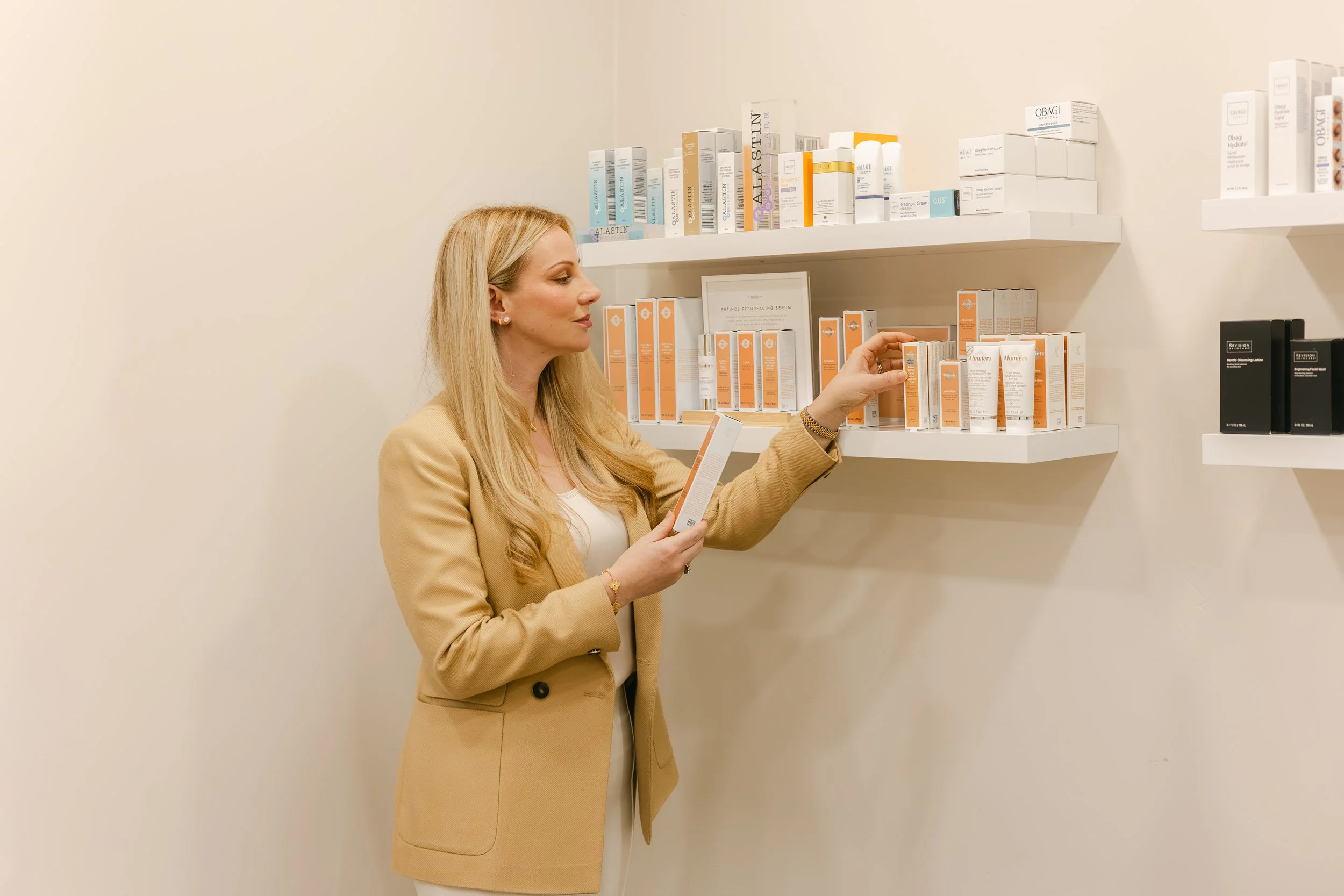
Dr Jess stocks ALL the leading medical-grade brands, so she can cherry-pick the best products on the market and create a bespoke plan that is truly tailored to your individual skin.

Medical-Grade Skincare & Bespoke Cosmeceuticals in Nottingham
Are you tired of spending money on heavily marketed high-street skincare products that promise flawless results but only leave you with a temporary surface shine? Welcome to professional-tier skin health.
Medical-grade skincare (cosmeceuticals) represents a profound scientific shift from standard beauty products. Operating from our doctor-led Mapperley clinic, we prescribe advanced, clinically proven formulations to correct complex skin conditions at their biological origin. Rather than sitting on the skin's surface, these high-potency systems target deep cellular pathways to effectively treat stubborn hyperpigmentation, active acne, rosacea, and structural dermal ageing.
-
The Depth of Delivery: A common point of confusion is why clinical skincare requires a consultation, while high-street products can be bought straight off the shelf. The distinction is defined by strict UK cosmetic regulations, ingredient purity, and transdermal penetration depths.
High-street cosmetic products are legally restricted to only affecting the stratum corneum—the dead, outermost layer of your skin. They are formulated to sit superficially on the skin surface, providing basic hydration while masking imperfections temporarily.
Medical-grade skincare, conversely, is formulated under strict clinical standards. These advanced systems combine highly concentrated, chirally correct active compounds with specialised transdermal vehicles.
This engineering allows key corrective molecules to bypass the lipid skin barrier and travel directly into the living basal layers of the dermis, yielding a permanent biological change:
Basal Layer Up-Regulation: Directly instructs living skin cells to speed up repair, boost natural hydration, and normalise melanin (pigment) production.
Fibroblast Acceleration: Stimulates deep fibroblast cells to manufacture a fresh framework of natural collagen and elastin, restoring skin thickness and elasticity.
True Barrier Repair: Restructures lipid layers to lock in moisture and protect sensitive skin from environmental stressors.
-
Because medical-grade skincare systems contain highly active, therapeutic concentrations of molecules, they function as corrective medical treatments rather than simple cosmetics:
The Power of Actives: Ingredients such as high-percentage retinoids, medical-grade Hydroquinone, and pure L-ascorbic acid are incredibly potent. If applied incorrectly or matched to the wrong skin profile, they can disrupt your skin barrier—resulting in chemical dermatitis, severe inflammation, or rebound pigmentation.
Bespoke Prescriptions: To safeguard your skin health, these professional brands are legally restricted to verified, doctor-led clinics. We physically or digitally map your exact skin architecture before creating a highly tailored, progressive regimen that evolves as your skin repairs.
Medical Grade Skincare FAQs
-
The core difference lies in their legal classification, ingredient purity, and structural depth of delivery. Over-the-counter (OTC) high-street cosmetics are legally capped by EU/UK cosmetic regulations to only impact the dead, outermost layer of your skin—the stratum corneum. They are formulated to sit superficially on the skin to provide temporary surface hydration.
Medical-grade skincare (cosmeceuticals), conversely, operates under strict clinical oversight. These formulations feature highly concentrated, chirally correct active compounds blended with advanced transdermal delivery systems. This allows ingredients like pure L-ascorbic acid or encapsulated retinol to penetrate past your skin barrier directly into the living basal layers. Here, they actively alter and up-regulate cellular behavior to treat hyperpigmentation, acne, and structural aging at their biological origin.
-
Because medical-grade systems contain therapeutic concentrations of highly active molecules, they behave like corrective treatments rather than basic moisturisers. Potent active ingredients—such as medical-grade Hydroquinone, prescription retinoids, or high-percentage Salicylic Acid—can disrupt your skin barrier if misapplied, resulting in chemical dermatitis, rebound hyperpigmentation, or severe inflammation. To preserve patient safety, premium clinical brands are legally restricted to verified, doctor-led dispensaries. This ensures a trained practitioner physically or digitally maps your skin type before tailoring a bespoke regimen.
-
Yes, this is a normal, expected clinical phase known as cellular purging or accommodation. When you introduce medical-grade retinoids or alpha-hydroxy acids (AHAs), they rapidly accelerate your skin's natural cellular turnover cycle from the standard 28 days down to roughly 14 days. This forces trapped microscopic debris, dead tissue, and congestion up to the surface all at once. This phase can present as mild flaking, temporary dryness, or superficial breakouts, and typically subsides within 2 to 4 weeks once your skin architecture adapts. An allergic reaction, by contrast, is characterized by persistent burning, severe itching, heat, and localized swelling—if you experience those symptoms, you should pause use and contact our clinic immediately.
-
While temporary superficial shifts—such as enhanced skin smoothness and superficial hydration—can be felt within the first 7 to 10 days, structural dermal correction follows a strict biological clock. True correction of hyperpigmentation, deep acne scars, and structural loss requires a minimum of 6 to 12 weeks of continuous use. This duration aligns with the time needed for your skin to execute 2 to 3 full cellular maturation cycles and for newly stimulated fibroblasts to synthesise visible networks of collagen and elastin.
-
From a true cost-per-dose perspective, yes. Cheap high-street formulations are mostly composed of water, cheap mineral fillers, and low-grade cosmetic silicones, containing only trace percentages of active ingredients to justify marketing buzzwords. Because their bio-availability is low, you end up applying larger quantities more frequently with minimal long-term physiological change. Medical-grade formulations are incredibly potent and stable. A pea-sized dose delivers a therapeutic concentration of active molecules, meaning a single bottle lasts significantly longer while producing structural improvements that eliminate the need to purchase multiple competing products.
Medical Grade Skincare at Your Beauty Doctor
Starting medical-grade skincare has no downtime, but active ingredients can cause some dryness, flaking or mild redness in the first few weeks while your skin adjusts. This is normal and usually settles by week 4 to 6. Visible change in tone and texture typically takes 8 to 12 weeks of consistent use.
Medical-grade skincare contains active ingredients at concentrations proven to change how the skin behaves, such as retinoids to speed cell turnover and stimulate collagen, and vitamin C to protect against sun and pollution damage. We build each routine around your skin analysis, and Dr Jess only stocks ranges she uses herself.
-
Bring your current products to your consultation so we can tell you what to keep and what to stop
Tell us if you are pregnant, planning a pregnancy or breastfeeding, as some actives are not suitable
Tell us about any skin conditions, prescribed creams or recent treatments such as peels or laser
Stop other exfoliating acids and retinol products unless we advise otherwise
-
As your skin adjusts to active ingredients, you may notice:
Dryness, tightness or light flaking, especially around the nose and mouth
Mild redness or sensitivity
A temporary increase in spots for some people, sometimes called purging, as skin turnover speeds up
These usually ease by week 4 to 6.
-
Introduce retinoids slowly, 2 to 3 nights a week at first, and build up as advised
Apply a pea-sized amount to dry skin, avoiding the eyelids and corners of the nose and mouth
Use a gentle cleanser and moisturiser alongside your actives
Wear a broad-spectrum SPF 30 or above every day, as actives make skin more sun-sensitive
Pause retinoids for 5 to 7 days before and after peels, SkinPen, laser or waxing, unless we advise otherwise
Stick with it. Changing products every few weeks resets progress
-
Skin may feel smoother within 2 to 4 weeks
Visible improvement in tone, texture and clarity typically takes 8 to 12 weeks
Results continue to build over 6 to 12 months of consistent use, and depend on continuing your routine
-
Some actives, particularly retinoids, are not suitable during pregnancy or breastfeeding. Very reactive skin or active eczema or rosacea may need a gentler plan first. If your routine is already working, we will tell you; you don't need to replace everything.
-
Please call us on 0115 795 3453 if you notice:
Burning, swelling or blistering
Redness or irritation that is getting worse after the first 2 weeks
A rash or signs of an allergic reaction
Breakouts that are severe or not settling after 6 weeks
Read more about Medical Grade Skincare on our blog…


Let's Talk
Not sure where to start or what treatments would be suitable for you? Book a consultation with one of our experts for a full facial assessment, and she will create a bespoke treatment plan for you- with zero pressure to proceed with anything else.