

CONCERNS
Hyperpigmentation, Sun Damage and Age Spots
YOUR BEAUTY DOCTOR - NOTTINGHAM
Darker patches or sun spots can make your complexion look less even, even when your skin feels comfortable. You may notice them on the face, chest or hands, or see marks remaining after a breakout.
At Your Beauty Doctor in Mapperley, Nottingham, we assess the pattern and history before recommending a treatment. Different types of pigmentation need different care, and a new or changing lesion must be checked before any cosmetic procedure.
You do not need to change the way you look to ask for advice!
Understanding Hyperpigmentation, Sun Damage and Age Spots
Hyperpigmentation means an area of skin looks darker because of increased pigment. It includes several patterns, such as marks after inflammation, sun-related spots and melasma. Sun damage can also involve roughness or other changes that are not simply extra pigment.
Age spots, also called solar lentigines, are usually flat, defined darker spots linked to cumulative sun exposure. Melasma more often forms patches and may be influenced by hormones. A brown mark cannot be diagnosed from its colour alone.
What Causes Hyperpigmentation?
CAUSES
Cumulative Sun Exposure
UV exposure can contribute to sun spots and make existing pigmentation more noticeable. Changes can build up over years, including on areas that are often exposed outside the face.
Inflammation and Irritation
Acne, eczema, an injury or an irritating product may leave a darker mark after healing. Repeated inflammation can create new marks while older ones are fading.
Hormonal and Individual Factors
Hormonal influences can be relevant to melasma, and skin tone affects the tendency to develop post-inflammatory marks. Medicines and other skin conditions may also contribute, so the history matters.
Can Home care Help?
WHAT MAY HELP
Sun protection is central to a pigment plan. Use suitable broad-spectrum sunscreen and reduce direct exposure with shade and protective clothing. Avoid picking or repeatedly irritating the skin.
ITS LIMITATIONS
Some post-inflammatory marks fade gradually once the cause is controlled. Others persist or recur. Do not use strong lightening products without advice. Seek medical assessment for a new or changing spot, bleeding, persistent crusting or an irregular lesion before treating it as an age spot.
Hyperpigmentation Treatment Options in Nottingham
TREATMENT OPTIONS
Chemical Peels
A peel may be considered for some superficial pigment patterns. Depth, formulation and preparation need to suit your skin. Irritation itself can cause pigment, so a stronger peel is not automatically preferable.
MOXI
MOXI is a fractional laser option offered by the clinic. It may be discussed for selected pigment concerns, with careful attention to pigment history and the risk of worsening or recurrent colour changes.
BBL HEROic
BBL HEROic is a pulsed-light treatment, despite often being described in searches as a laser. It may be considered for suitable sun-related pigment after the lesion and skin type have been assessed. It is not an automatic choice for melasma or every darker skin tone.
Choosing the right approach for you
We assess whether the pattern suggests sun spots, post-inflammatory marks, melasma or a lesion needing medical investigation. We ask about sun exposure, hormones, medicines, irritation and previous procedures.
Darker skin tones, recent tanning and a history of pigment after inflammation require particular care. A combined MOXI and BBL plan is a separate clinical decision, not a default package. Sometimes controlling inflammation and building a tolerable routine should come before a procedure.
DOCTOR’S ADVICE
Dr. Jess Advice on Hyperpigmentation, Sun Damage and Age Spots
“The word pigmentation covers several different concerns. I would not treat a sharply defined sun spot in the same way as a broad patch that changes with hormones or irritation. The first priority is to understand the pattern and check that any individual lesion is appropriate for cosmetic treatment. Sun protection and control of inflammation remain important whichever route is chosen. A light or laser procedure can sometimes help, but it can also trigger pigment changes in unsuitable skin or with unsuitable settings. Melasma in particular can recur. An honest plan should explain what may fade, how recurrence will be managed and why the skin needs assessment before choosing a device.”
Dr Jessica Halliley • Aesthetics Doctor and GP
MBChB (Hons), MRCGP, DRCOG, PGDipAes

WHAT TO EXPECT
Your patient journey at Your Beauty Doctor
STEP 1
Identifying the Pigment Pattern
We review the areas, their timing and any changes, along with medicines, sun exposure and previous skin reactions.
STEP 2
Planning Care and Protection
We explain skincare, suitable procedures or medical assessment where needed. Likely benefit, recurrence, risks and costs are discussed.
Preparing and Treating
STEP 3
If appropriate, you receive sun-exposure, product and aftercare instructions. A test area may be used where indicated by the protocol.
STEP 4
Reviewing Colour Changes
We reassess once the skin has healed and pigment has had time to change. Ongoing care focuses on the cause as well as the appearance.
What results can you expect?
Suitable treatment may fade selected spots or reduce contrast between patches and surrounding skin. Improvement may be gradual, and pigment can recur with sun exposure, hormones or renewed inflammation.
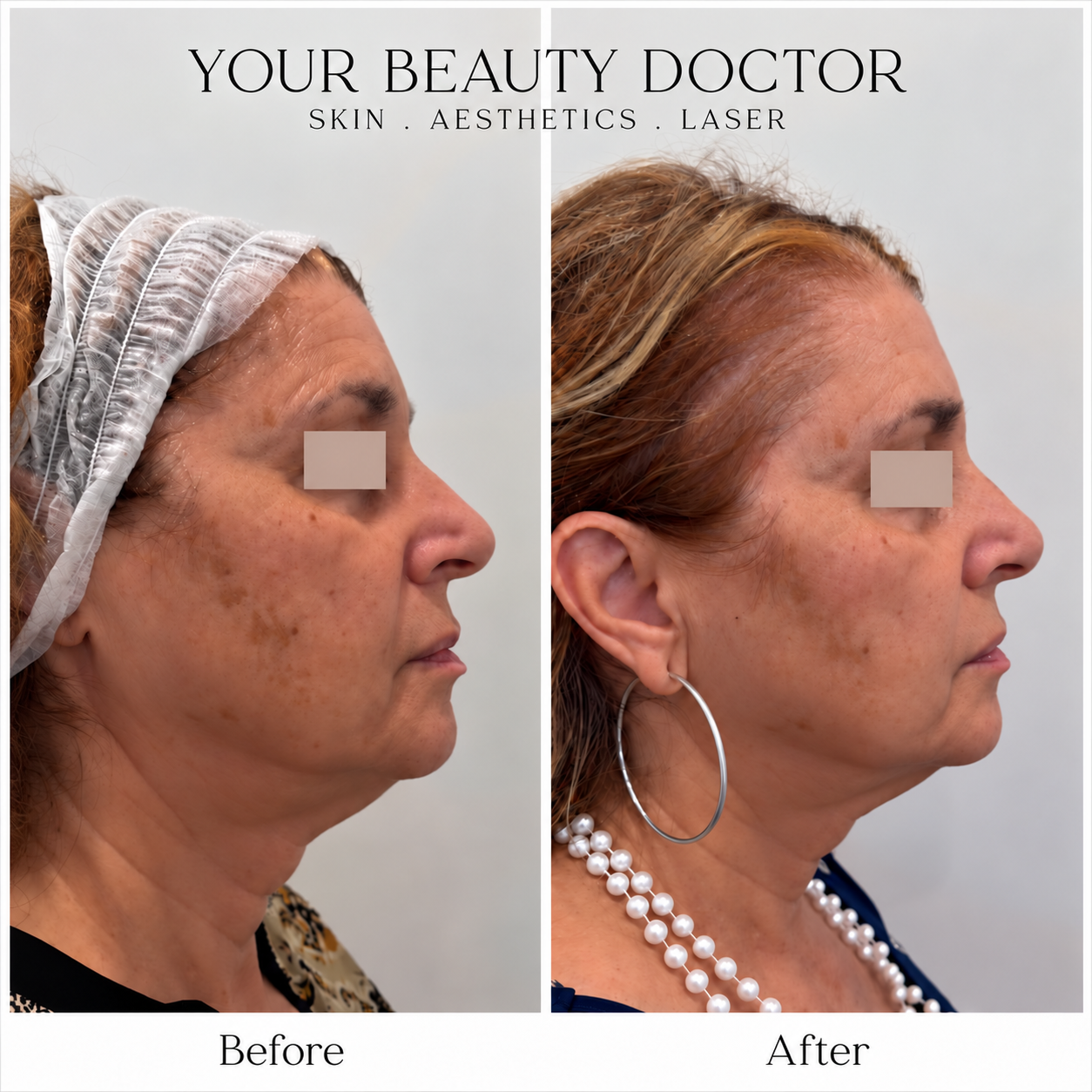
Light treatment, laser and peels can cause temporary darkening, redness or flaking. Risks include burns, lasting darker or lighter patches and scarring. Treatment should not proceed on a suspicious lesion. Before-and-after comparisons need consistent lighting and a clear description of the pigment treated.
Frequently Asked Questions about Hyperpigmentation, Sun Damage and Age Spots
-
No. Age spots are usually defined sun-related marks; melasma tends to form patches and can be influenced by hormones. The distinction changes the treatment plan.
-
Yes, some fade gradually once acne and irritation are controlled. The depth of pigment and your skin influence how long this takes.
-
No. Suitability depends on skin type, tanning, pigment pattern and the device protocol. An assessment is needed before recommending pulsed-light treatment.
-
No permanent cure should be promised. Melasma can recur, and a laser may not be the best first step. Sun protection and a personalised plan remain important.
-
Heat, injury or irritation can trigger post-inflammatory pigment changes. Preparation, treatment choice and aftercare help manage risk but cannot eliminate it.
-
No. A new, changing, bleeding or irregular lesion needs medical assessment before cosmetic treatment.
-
Yes. The clinic offers assessment of pigment concerns in different areas. The skin and diagnosis must be appropriate for the chosen treatment.
-
Possibly. Pigment can recur, and ongoing protection is important. The need for further procedures depends on the cause and your response rather than a fixed automatic schedule.

Let's Talk
For advice on uneven pigment or sun spots, book a consultation at our Nottingham clinic. We will help identify the concern before discussing a treatment or recommending further medical assessment.