

Sofwave vs XERF: Which Skin Tightening Treatment Is Right for You?
If your jawline looks softer than it used to and you have started seeing XERF online, you may be wondering how it compares with Sofwave. Both use controlled heat to encourage collagen remodelling, but they deliver that heat differently. At Your Beauty Doctor in Mapperley, Nottingham, we currently offer Sofwave, not XERF. This comparison explains the differences, what they may mean for your skin and why an individual assessment matters before booking either treatment.
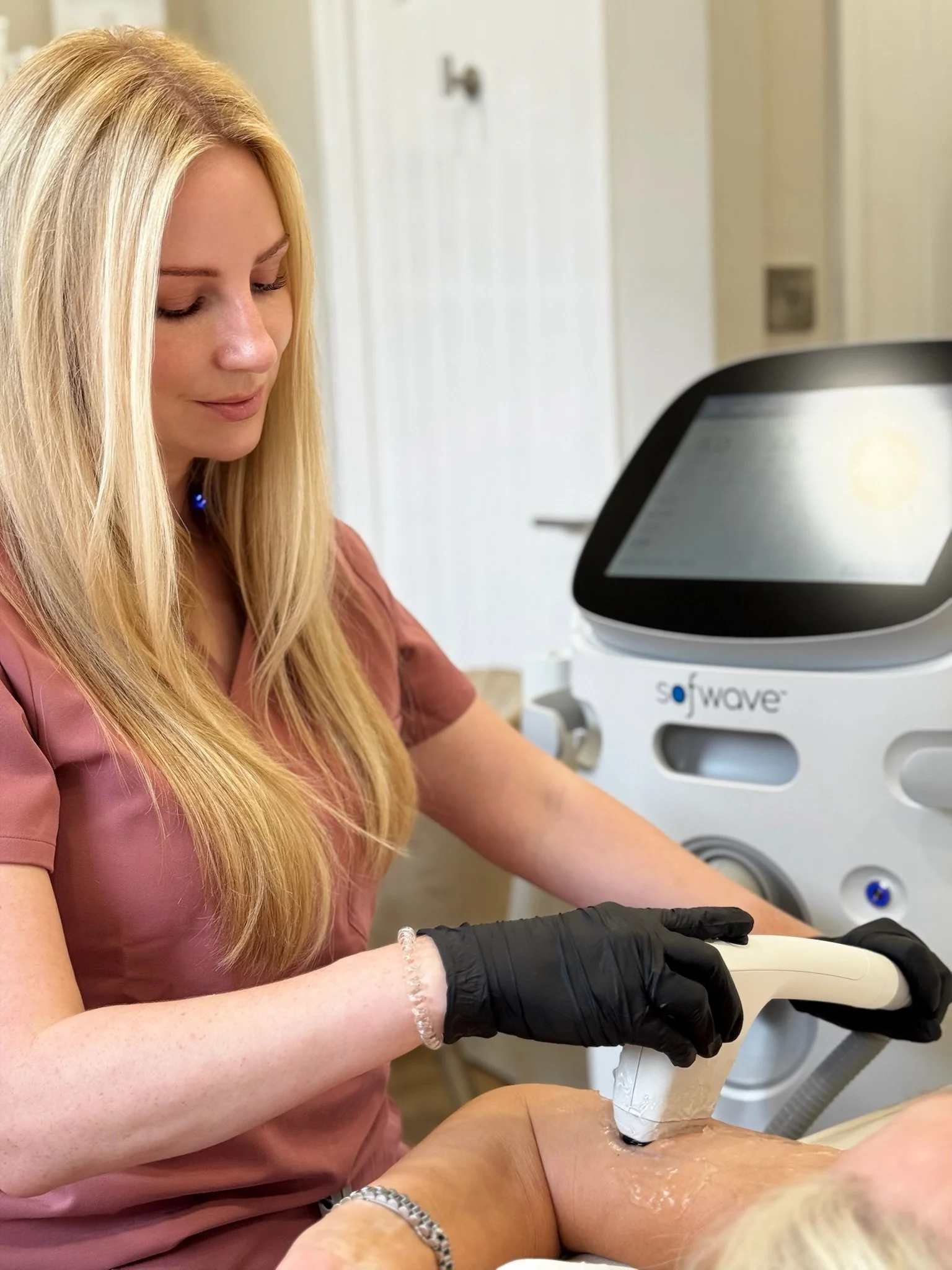
Is Sofwave or XERF better for skin tightening?
Neither Sofwave nor XERF is better for everyone. Sofwave uses ultrasound to target a defined zone around 1.5 mm within the skin. XERF uses radiofrequency with adjustable settings for different tissue depths. Many Sofwave patients have one initial treatment; XERF’s manufacturer recommends two. The right option depends on the cause and extent of laxity, your medical history and the improvement you want.
How Sofwave works
Sofwave delivers ultrasound through parallel beams, using technology the manufacturer calls SUPERB. The thermal effect is centred at approximately 1.5 mm in the mid-dermis, the middle layer of the skin where collagen provides support. Controlled heating encourages a repair response, with new collagen forming over time. Built-in SofCool cooling helps protect the skin surface.
That defined treatment zone is the key distinction in this comparison. Sofwave is designed to work within the dermis, rather than selecting settings to heat several deeper tissue layers. It leaves the skin intact, although temporary reactions and other risks remain possible.
If you would like the fuller explanation, our Sofwave treatment page and Searching for “Softwave” guide cover the treatment in more detail. You can also read our original Sofwave introduction. Here, the focus is how its approach differs from XERF, rather than repeating the whole treatment guide.
How XERF works
XERF is a monopolar radiofrequency device made by Cynosure Lutronic. The manufacturer describes a dual-frequency system using 6.78 MHz and 2 MHz, with shallow, middle and deep settings. These are intended to deliver heat across different tissue depths, including deeper supporting structures beneath the skin.
Cynosure Lutronic also describes ten intensity levels, pulsed energy delivery and integrated cryogen cooling. The cooling is designed to protect the surface and manage heat sensations without numbing cream. The device does not use needles.
This gives XERF a different treatment approach from Sofwave. Adjustable depth may be relevant to a particular treatment plan, but a deeper setting does not automatically mean a greater or more suitable improvement. As we do not offer XERF, the descriptions here reflect manufacturer information rather than our own experience delivering it.
Sofwave vs XERF at a glance
| Comparison | Sofwave | XERF |
|---|---|---|
| Energy type | Ultrasound through parallel beams | Monopolar radiofrequency |
| Treatment depth | Thermal effect centred around 1.5 mm in the dermis | Shallow, middle and deep settings |
| Initial course | Often one treatment; individual plan may differ | Manufacturer recommends two, 4 to 6 weeks apart |
| Session time | Often 30 to 45 minutes, plus numbing and preparation | Manufacturer gives 45 minutes or less for full face |
| Numbing | YBD uses topical numbing cream | Designed to work without numbing cream |
| Downtime | Usually minimal; temporary redness or tenderness possible | Manufacturer describes minimal downtime |
| Results onset | Gradual improvement over weeks and months | Manufacturer describes early change followed by gradual improvement |
| Longevity | YBD gives a typical 12 to 18 months; annual maintenance | Individual response varies; manufacturer suggests maintenance once or twice yearly |
| UK availability | Available at YBD in Nottingham | Available through UK providers |
| At Your Beauty Doctor | Yes | No |
Think of the difference as heating a defined band within the skin versus selecting settings to heat across several tissue levels. Both approaches aim to improve firmness through a response to controlled heat. The depth, however, is only one part of the decision. Your starting point and the amount of change you expect are just as important as the technology being used.
Sofwave or XERF?
Sofwave may suit early to moderate skin laxity, including a softening jawline, fine lines or loose skin around the brow, neck and under the chin. It can be considered across skin tones, following assessment. It is most relevant when gradual firming is a realistic goal and you want a treatment with little usual recovery time.
A clinician offering XERF may consider its adjustable settings where treatment across different depths is appropriate. Its no-numbing design and recommended two-session course are practical differences worth discussing. They do not make it the automatic choice for a heavier or more noticeably sagging face.
Significant excess skin may need a surgical opinion. Hollowing or lost facial volume may call for a different plan, rather than more tightening. Open wounds, severe or cystic acne, active infection, pregnancy, breastfeeding and implants all need medical screening. Electronic and metal implants require device-specific advice. Tell the clinic about medicines, previous procedures and existing filler; Sofwave’s manufacturer advises against treatment directly over filler.
If changes around menopause are part of your concern, our guide to collagen banking for menopausal skin explains the wider treatment discussion. You do not have to choose a device before your consultation.
How long do Sofwave and XERF results last?
Sofwave results develop gradually. Our published guidance describes improvement over three to six months, with effects typically lasting 12 to 18 months and annual maintenance recommended. These are guide timings, not a promise of the same response for every patient. Earlier changes can be subtle, and ongoing ageing continues.
For XERF, Cynosure Lutronic recommends an initial two treatments four to six weeks apart, followed by maintenance once or twice a year. A maintenance schedule is not proof that every result lasts for that whole interval. Ask the treating clinic what evidence supports its longevity advice and when it reviews your response.
Dr Jess’s approach to choosing a treatment
Your Beauty Doctor’s approach is to plan treatment around your skin and the result you want, rather than what is trending online. Sofwave is one of the options available here, delivered by the team under Dr Jess’s clinical lead. The assessment may also identify reasons to choose another approach or postpone treatment. Learn more about Dr Jessica Halliley and the clinic’s approach to natural-looking results.
Other options at Your Beauty Doctor
SkinTyte uses infrared light to encourage firming and may be considered for mild to moderate laxity. Skin boosters focus on hydration and skin quality, while Sculptra stimulates collagen and may be considered where loss of volume is part of the concern. These treatments address different needs. Choosing between them depends on what is changing in your skin, with any combination planned and spaced appropriately.
FAQs about Sofwave and XERF
Is Sofwave or XERF better for a sagging jawline?
It depends on what is causing the change and how much laxity is present. Sofwave may suit early to moderate laxity; XERF offers adjustable radiofrequency depths. Marked sagging, excess skin or volume loss needs a wider assessment rather than an automatic device recommendation.
How many sessions of XERF do you need compared with Sofwave?
Many Sofwave patients have one initial treatment, followed by maintenance. XERF’s manufacturer recommends two initial sessions, four to six weeks apart. The treating clinic should confirm the course for your skin and review whether further treatment is appropriate.
Is XERF available in Nottingham?
Your Beauty Doctor does not offer XERF. We offer Sofwave at our Mapperley clinic in Nottingham. For XERF elsewhere in Nottingham, check current availability directly with the manufacturer’s provider service or the clinic concerned; we cannot confirm local provision.
Does Sofwave hurt more than XERF?
There is no reliable pain ranking for every patient. Sofwave at Your Beauty Doctor uses topical numbing cream and integrated cooling; XERF is designed to need no numbing cream. Both use heat, and individual sensitivity and treatment settings affect the experience.
Can you have Sofwave and XERF together?
Do not arrange both independently or assume that combining them gives a better result. Tell your treating clinician about previous and planned energy treatments. They should decide whether a combination has a clear purpose, whether it is suitable and how to space appointments.
How much does Sofwave cost at Your Beauty Doctor?
Our current Sofwave treatment page lists pricing from £1,995. Your quote depends on the treatment area and plan, so confirm the full-face price and current options with the team. See our Sofwave treatment page for the latest published information.
Visit us in Mapperley
Your Beauty Doctor is at 1A Whittingham Road, Mapperley, Nottingham NG3 6BL. Call 0115 795 3453 if you have questions about Sofwave or would like help arranging your appointment. Your device treatment is delivered by the team under Dr Jess’s clinical lead.
