

Botox vs Dermal Fillers in Nottingham: What's the Difference and Which Do You Need?
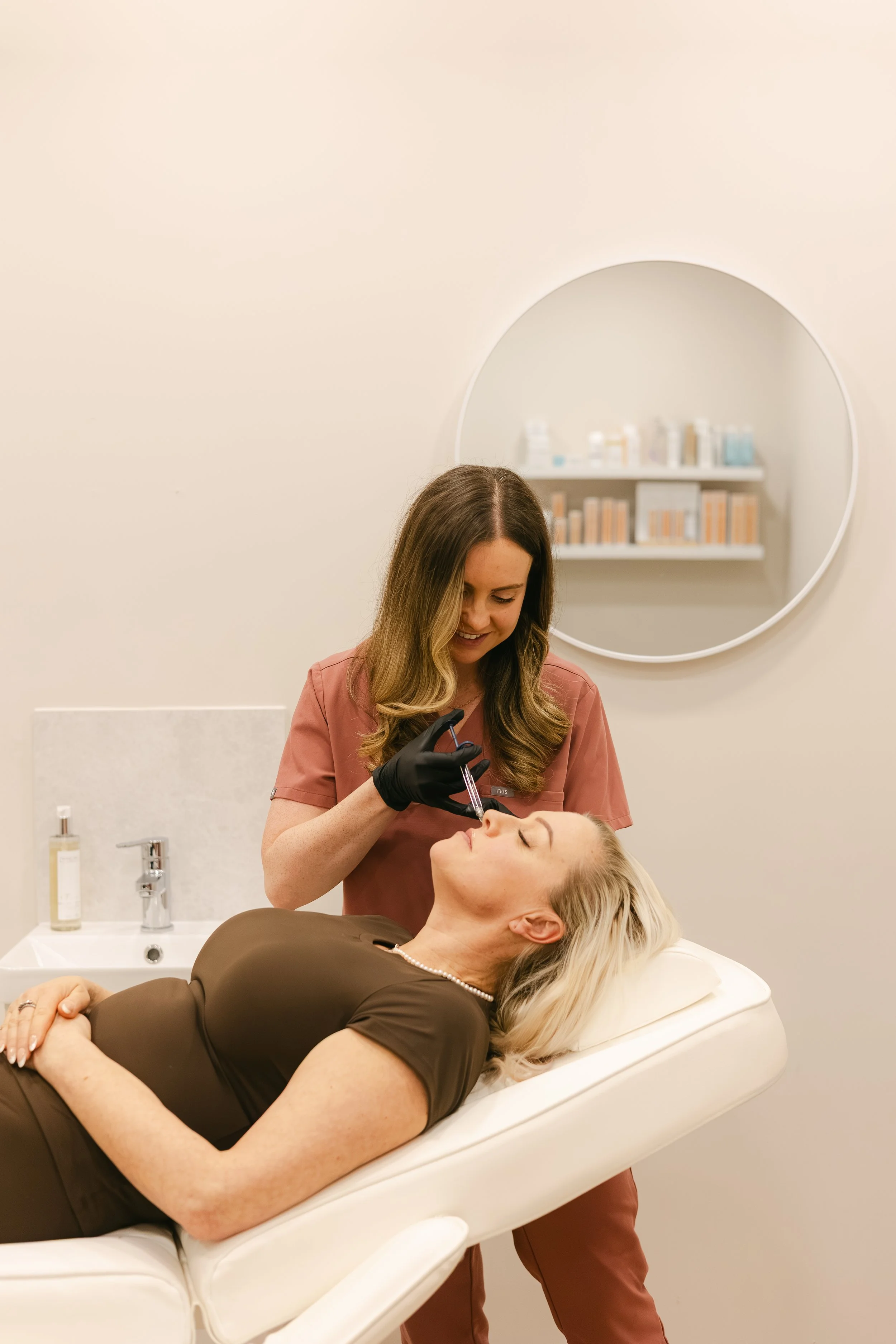
Botox and dermal fillers are often spoken about as though they are two versions of the same thing. They are not. They work in completely different ways, treat different types of facial change and, in the right patient, can sometimes complement each other.
The easiest way to think about it is this: anti-wrinkle injections mainly change how strongly certain muscles contract, while dermal fillers change volume, support or contour.
So when a patient asks me, 'Do I need Botox or filler?', I first ask what they are trying to improve.
What does Botox do?
Botox is a brand name commonly used when people talk about anti-wrinkle injections. The treatment uses botulinum toxin type A to temporarily reduce the activity of selected muscles.
It is most commonly used for dynamic lines, the lines that become more visible when you frown, raise your eyebrows or smile. At YBD, common facial areas include frown lines, forehead lines and crow's feet, with selected lower-face uses assessed individually.
The full treatment information is on our anti-wrinkle injections treatment page
What do dermal fillers do?
Dermal fillers are injectable gels, commonly based on hyaluronic acid, used to restore volume, improve structural support or refine facial proportions.
Depending on the area, filler might be used to support cheeks, improve a hollow under-eye transition, balance a chin, define a jawline or soften a deeper fold.
You can see the different areas we treat on our dermal fillers.
Botox treats movement. Filler treats structure.
This is the most important distinction.
If a line is mainly caused by repeated muscle movement, relaxing that movement may be the most logical approach. If the concern is a hollow, a loss of support or a change in facial contour, filler may be more relevant.
Some lines have both a movement and a structural component, which is why treatment should never be selected from a photo or a trend alone.
Which is better for forehead lines?
Forehead lines are usually strongly influenced by muscle movement, so anti-wrinkle treatment is the option we would normally assess first. Filler is not routinely used as a simple substitute for forehead Botox.
Which is better for cheeks or jawline definition?
Where the goal is restoring support or changing contour, dermal filler is usually the more relevant tool. Cheek, chin and jaw treatments rely on careful structural assessment and conservative placement.
What about lines around the mouth?
This is where the answer becomes less black and white. Smoker's lines, a downturned mouth, marionette lines and nasolabial folds can have different causes.
Muscle movement may contribute to some lower-face concerns, while others are primarily structural. Sometimes skin quality also plays a role. This is why I assess the face at rest and in movement before recommending anything.
Can Botox replace filler?
No. Anti-wrinkle injections cannot restore lost cheek volume or project a recessed chin because they do not add structural support.
Can filler replace Botox?
Not usually. Filler cannot stop a muscle contracting. Putting filler into every expression line would not address the reason the line is being repeatedly folded.
Can you have Botox and filler together?
Yes, when there is a good reason. Some patients have both dynamic wrinkles and structural volume loss, so a combined plan can sometimes give a more balanced result.
The important word is balanced. I do not believe in creating a shopping list of treatments. Our holistic facial rejuvenation guide explains why the face should be assessed as a whole rather than one line at a time.
Which looks more natural?
Either can look very natural when the treatment is appropriate, conservative and well planned. Either can also look unnatural when it is overdone.
At YBD, the goal is movement where you should have movement, support where you have lost support, and a result that still looks like your face.
Which treatment lasts longer?
They have different timelines and the duration varies between patients, areas and products. Rather than choosing based on longevity alone, I would choose based on what is actually causing the concern.
The individual treatment pages explain expected timelines in more detail.
How do I know which one I need?
A consultation looks at facial movement, volume, bone structure, skin quality, proportions and your previous treatment history. Sometimes the answer is Botox, sometimes filler, sometimes another treatment entirely, and sometimes the best advice is to leave an area alone.
That is also the approach we use with busy patients who simply want to look fresher. Our guide for tired mums is a good example of choosing treatments around the reason someone looks tired, rather than assuming there is one universal fix.
Book a consultation in Nottingham
If you are not sure whether your concern is caused by muscle movement, volume loss or both, we can talk it through at our Nottingham clinic and create a plan that keeps the result subtle and natural.
Frequently asked questions
What is the difference between Botox and dermal fillers?
Botox, or anti-wrinkle treatment, temporarily reduces selected muscle activity and is commonly used for dynamic expression lines. Dermal fillers add or restore volume and structural support, so they are used for concerns such as hollows, facial contour and deeper folds.
Is Botox or filler better for wrinkles?
It depends on the type of wrinkle. Lines caused mainly by repeated muscle movement may respond better to anti-wrinkle treatment, while deeper folds linked to volume or structural change may need a different approach.
Can Botox and filler be used together?
Yes, in suitable patients. They work in different ways, so they can sometimes complement each other when both muscle activity and structural changes are contributing to the overall concern.
Which looks more natural, Botox or filler?
Both can look natural when they are used conservatively and for the right reason. Natural results depend more on assessment, dosing, placement and restraint than on choosing one treatment over the other.
Can Botox replace dermal filler?
No. Botox does not add volume or structural support, so it cannot replace filler where the main concern is a hollow, recessed feature or loss of facial volume.
How do I know whether I need Botox or filler?
A face-to-face assessment looks at movement, volume, facial structure, skin quality and your goals. The most appropriate treatment is then chosen to match the cause of the concern.
