

Cheek filler and Sculptra treat hollow cheeks in different ways. Cheek filler replaces volume, and you see the change on the day. Sculptra stimulates your own collagen, and the change builds over three to six months.
Neither is better for everyone. The right choice depends on what is causing the hollowing, how much volume has gone and how quickly you want to see a difference.
What Causes Hollow Cheeks?
Age-related changes in facial volume.
Genetics and natural facial structure. Some faces have always been slimmer through the mid-face.
Weight loss, which reduces facial fat.
Skin quality is a separate issue. Cheeks can look hollow because structural volume has gone, because the skin has lost firmness, or both. The treatment depends on which one is behind what you see. How Does Cheek Filler Work?
Cheek filler is a hyaluronic acid gel. At YBD, high-density filler is placed deeply, onto the bone, to mimic lost bone structure and lift the tissue above it.
Results are visible immediately and settle over one to two weeks. Cheek filler usually lasts 12 to 18 months, and up to 24 months in some people.
For two to five days you may feel a dull ache or tenderness when you press on your cheeks, and slight swelling or small bruises can occur. Avoid intense exercise and facial massage for 48 hours. Filler also carries less common risks, which I go through in full at consultation. What Is Sculptra and How Does It Work?
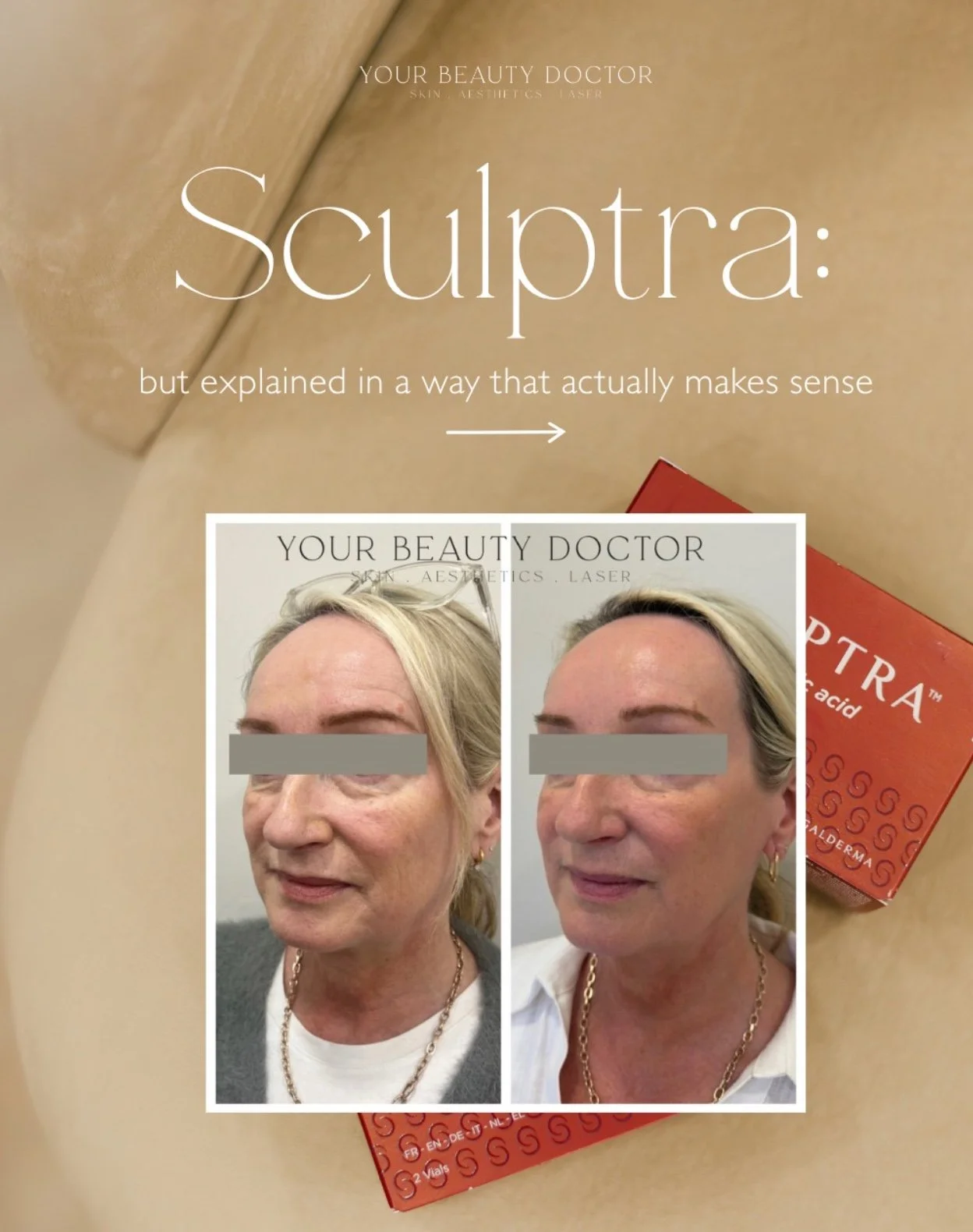
Sculptra contains poly-L-lactic acid. It does not add volume straight away. Instead, it stimulates your body to produce new collagen.
Your face looks plumper immediately after treatment, but that is the sterile water the product is mixed with. It is absorbed within a few days, and you return to your starting point. The collagen change then develops over three to six months.
A course is usually two to three sessions, four to six weeks apart. Results can last up to two years, with a maintenance session every 12 to 18 months.
Aftercare follows the 5-5-5 rule: massage the treated area for five minutes, five times a day, for five days. This keeps the product evenly spread and reduces the risk of small lumps under the skin.
| Cheek filler | Sculptra | |
|---|---|---|
| Treatment approach | Replaces lost volume | Stimulates new collagen |
| Main concern addressed | Localised volume loss and contour | Gradual, overall thinning and firmness |
| Time until changes are visible | Immediately; settled by one to two weeks | Three to six months |
| Treatment course | Usually one appointment | Two to three sessions, four to six weeks apart |
| Maintenance | Usually lasts 12 to 18 months, up to 24 in some people | Lasts up to two years; maintenance every 12 to 18 months |
| Limitations | Does not address skin quality | No immediate change; needs the full course and daily massage |
| Risks | Tenderness, swelling and bruising; less common risks discussed at consultation | Small lumps if the product is not evenly spread; other risks discussed at consultation |
Which Treatment May Be More Suitable for Hollow Cheeks?
Filler suits localised volume loss, such as flattening over the cheekbone, where you want a defined change you can see that day.
Sculptra suits gradual, overall thinning, where firmness is part of the concern and you prefer a change that builds over months.
Sculptra may not be right for you if you have an event in the next few weeks, or if you can't commit to the full course and the massage. Filler may not be right for you if the main issue is skin quality rather than volume. Using both is not automatically necessary.
Can Cheek Filler and Sculptra Be Used Together?
Sometimes. Whether to combine them, and in what order, depends on your assessment. There is no standard combined protocol. The priority is avoiding volume your face doesn't need.
What Happens During a Consultation at Your Beauty Doctor?
At our Mapperley clinic in Nottingham, I assess your facial proportions, where cheek volume has gone, your skin quality and any previous aesthetic treatments. We discuss your goals, what is realistic, the alternatives and the risks. You don't need to decide on the day.
You may also want to compare collagen stimulators,
Cheek filler restores volume immediately, while Sculptra rebuilds collagen gradually. At Your Beauty Doctor, the choice starts with working out what is causing your hollow cheeks, so the next step is to book a consultation with Dr Jess.
Frequently Asked Questions
Is Sculptra better than cheek filler for hollow cheeks?
Not for everyone. Sculptra suits gradual, overall thinning where firmness is part of the concern. Cheek filler suits localised volume loss where you want an immediate change.
Does cheek filler or Sculptra give more immediate results?
Cheek filler. Results are visible straight away and settle over one to two weeks. Sculptra's early plumpness is water that is absorbed within days, and the collagen change takes three to six months.
Can cheek filler make the face look fuller?
Yes. That is its purpose, which is why the amount and placement have to suit your proportions. The aim is to replace what has been lost, not to add volume your face doesn't need.
Can Sculptra and cheek filler be combined?
Sometimes, after assessment. There is no standard combined plan. The order, timing and whether both are needed depend on your face.
Does cheek filler or Sculptra need more maintenance?
Both are usually repeated every 12 to 18 months or so. Sculptra needs more at the start, with two to three sessions and five days of massage after each one.
