

Crepey Skin in Nottingham: Why Skin Becomes Thinner, Looser and Less Elastic With Age
'Crepey' is one of those words patients use when the skin does not necessarily look deeply wrinkled, but it feels thinner, looser and more finely crinkled than it used to. It can show up under the eyes, on the neck, chest, arms or hands, and it often becomes more noticeable as the skin loses some of its natural resilience.
Crepey skin is not a diagnosis and it does not have one single treatment. It is a description of how skin looks and feels, so the first job is working out why it has changed and which layer of the problem we are actually trying to improve.
What does crepey skin actually mean?
Crepey skin is usually thinner-looking skin with lots of fine lines and reduced bounce. It may look slightly loose or fragile and can become more obvious when the skin is dry.
It is different from a single deep wrinkle and different again from significant loose skin. Those distinctions matter when we are deciding what can realistically help.
Why does skin become thinner with age?
Collagen production slows
Collagen gives skin much of its strength and support. As production gradually declines, the skin can become thinner and less firm.
Elastin and skin resilience change
Elastin helps skin stretch and return to shape. Over time, the quality of the elastic network changes, so skin may not spring back as readily.
Natural hyaluronic acid and hydration reduce
Skin also tends to hold less water as we age. Dryness can make fine crinkling look much more obvious, which is why some crepey skin improves visually when hydration and barrier function are addressed, even though hydration alone does not rebuild lost structure.
Why sun exposure matters so much
UV exposure accelerates breakdown of collagen and elastin. That is why crepey skin is often most noticeable on areas that have had years of sun exposure, such as the face, neck, chest and hands.
Daily sun protection is therefore one of the most useful long-term things you can do, even if you are also considering clinic treatments.
Where does crepey skin commonly appear?
Under the eyes
The under-eye skin is naturally thin, so early changes in texture and fine lines can show here before other areas.
Neck and decolletage
The neck and chest are often exposed to the sun but receive less consistent skincare than the face, so loss of elasticity can become noticeable.
Hands
The backs of the hands lose both skin thickness and underlying volume over time. If this is your main concern, our separate guide to ageing hands goes into the hand-specific options in more detail.
Upper arms and body skin
Body skin can also become looser and more finely wrinkled, particularly after significant weight change or with age.
Is crepey skin the same as loose skin?
Not exactly. Crepey skin describes thinness, fine crinkling and reduced elasticity. Loose skin describes excess or lax tissue more broadly. You can have one without the other, or both together.
Can skincare improve crepey skin?
Skincare can make a meaningful difference to hydration, surface texture and protection from further damage. Depending on your skin, a routine may include moisturising ingredients, retinoids, antioxidants and daily broad-spectrum SPF.
At YBD, we specialise in medical-grade skincare, using clinically selected products and active ingredients to target concerns such as dehydration, sun damage, texture and signs of skin ageing more effectively than a basic skincare routine alone. The right products depend on your skin, which is why we prefer to build a routine around the individual rather than recommend the same products to everyone.
However, creams cannot fully replace collagen, lost facial volume or more advanced laxity. That is where expectations need to stay realistic.
Which professional treatments may be considered?
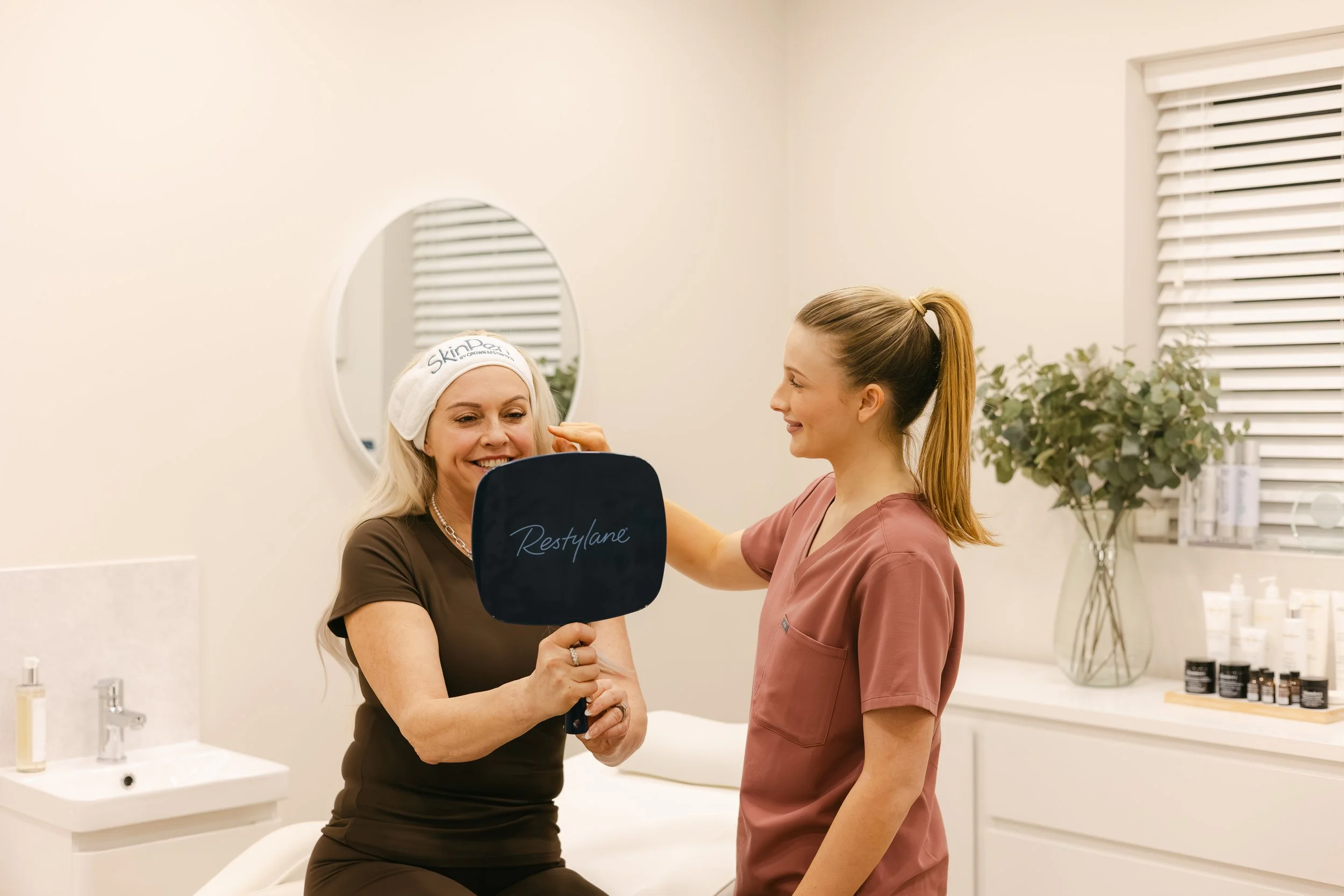
The treatment depends on the area and the main cause. At YBD, the options we may discuss include:
Microneedling for texture and collagen stimulation
SkinPen microneedling creates controlled micro-injuries that stimulate a healing and collagen response. It can be useful where fine lines, texture and skin quality are the priority.
Polynucleotides for delicate or thinning skin
Polynucleotides may be considered for thin, crepey skin, particularly in delicate areas such as under the eyes.
Sunekos for skin repair without added volume
Sunekos combines low-molecular-weight hyaluronic acid with amino acids to support the skin's own repair processes. It is often discussed alongside Profhilo where the priority is skin quality rather than volume, though the two work slightly differently and are not always interchangeable.
Restylane Skinboosters for hydration and skin quality
Restylane Skinboosters use hyaluronic acid delivered in small amounts across the treatment area to improve hydration, smoothness and overall skin quality rather than create structural volume.
Depending on your skin and the area being treated, we can help you decide whether Restylane Skinboosters, Profhilo, Sunekos or another treatment is the most appropriate starting point.
Profhilo for hydration and broader skin quality
Profhilo is a hyaluronic acid-based injectable used to support hydration, bounce and skin bio-remodelling across areas such as the face and neck.
Sofwave where laxity is part of the problem
Where the concern is not only thin texture but also loss of firmness, Sofwave may be discussed as a non-surgical skin-tightening option for suitable patients.
Why one treatment cannot fix every type of crepey skin
If the skin is mainly dehydrated, treating laxity alone misses the point. If the problem is structural, a hydrating injectable will not reproduce the same effect as a treatment aimed at firmness. If there is significant excess skin, non-surgical treatment also has limits.
This is why I prefer a long-term plan rather than a one-off 'anti-ageing' treatment. Our guide to ageing well in your 30s explains the same philosophy: support the skin at the stage it is in, and let the plan evolve as you do.
What I look for during a skin assessment
I look at skin thickness, hydration, sun damage, pigmentation, elasticity, the amount of true laxity, the area involved and any previous treatments. We also talk about how much downtime you are comfortable with and what would count as a worthwhile improvement for you.
Can crepey skin be completely removed?
Usually, the realistic goal is improvement rather than making skin behave as it did decades ago. We can often improve texture, hydration or firmness, but normal skin ageing continues.
If crepey or thinning skin is bothering you, a skin consultation at our Nottingham clinic can help us work out which part of the problem is most treatable and which approach is worth your time.
Frequently asked questions about Crepey Skin
What causes crepey skin?
Crepey skin is usually linked to gradual collagen and elastin changes, reduced hydration, cumulative sun exposure and natural skin thinning with age. Genetics and weight change can also influence how noticeable it becomes.
Can crepey skin be tightened?
Some non-surgical treatments may improve firmness and texture in suitable patients, but results depend on how much true laxity is present. Significant excess skin has limits with non-surgical treatment.
What is the best treatment for crepey skin?
There is no single best treatment. Microneedling, polynucleotides, Sunekos, Restylane Skinboosters, Profhilo or skin-tightening treatments such as Sofwave may be considered depending on whether the main concern is texture, thinning, hydration or laxity.
Can skincare improve crepey skin?
Yes. Skincare can improve hydration, surface texture and protection from further sun damage. At YBD, we specialise in medical-grade skincare so that active ingredients can be selected specifically for the skin concern being treated. Skincare cannot fully replace lost deeper structure, so expectations should stay realistic.
Why is crepey skin common under the eyes and on the neck?
The skin in these areas is naturally thin and can show age-related collagen loss and sun damage earlier. The neck is also often less consistently protected with skincare and SPF than the face.
Does crepey skin mean I need filler?
No. Crepey skin is mainly a skin-quality description. Filler is used for structural volume and contour, so it is only relevant when volume loss is also part of the concern.
